How to Choose the Perfect Wedding Dress For Your Body Type: A 2026 Guide

Table of Contents
Key Takeaways
|
Over 2.5 million weddings are projected for 2026 in the USA. And searches for “how to choose a wedding dress” are up 70% in just the last month.
That tells you one thing: a lot of brides are standing in front of a mirror right now, completely overwhelmed: so many silhouettes, so many opinions, so much noise.
The truth is, the most stunning wedding dress starts with one thing: knowing your body shape. Once you know that, everything gets clearer. This guide walks you through every body type, every major bridal dress style, what works, what to skip, and which 2026 trends are worth trying. You will leave here knowing exactly what to look for.
How Do I Determine My Body Shape Before Shopping?
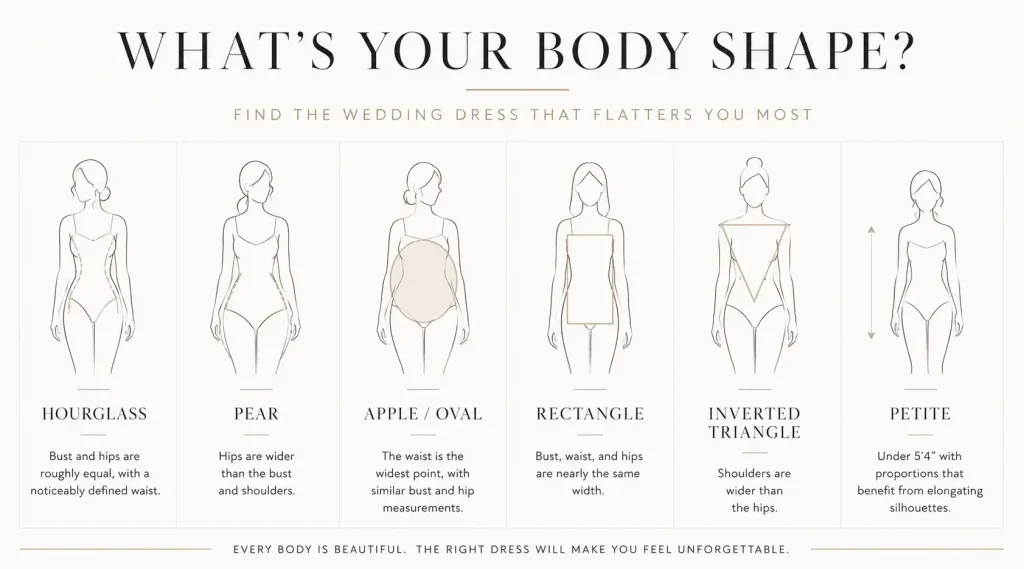
You do not need a stylist for this part. You need a soft tape measure, a mirror, and five minutes. Take these four measurements and write them down:
- Bust: Measure around the fullest part of your chest
- Waist: Measure at your narrowest point, usually about one inch above your belly button
- Hips: Measure around the fullest part below your hip bone
- Shoulders: Measure from one shoulder tip to the other
Once you have those numbers, compare them. Here is a simple reference:
| Body Shape | What to Look For |
| Hourglass | Bust and hips roughly equal, waist noticeably narrower |
| Pear | Hips wider than bust and shoulders |
| Apple / Oval | Waist is the widest point, hips and bust are similar |
| Rectangle | Bust, waist, and hips are all roughly the same width |
| Inverted Triangle | Shoulders wider than hips |
| Petite | Under 5’4″ — elongation is your primary goal |
Wedding Dress Silhouettes Explained: What Each One Actually Looks Like
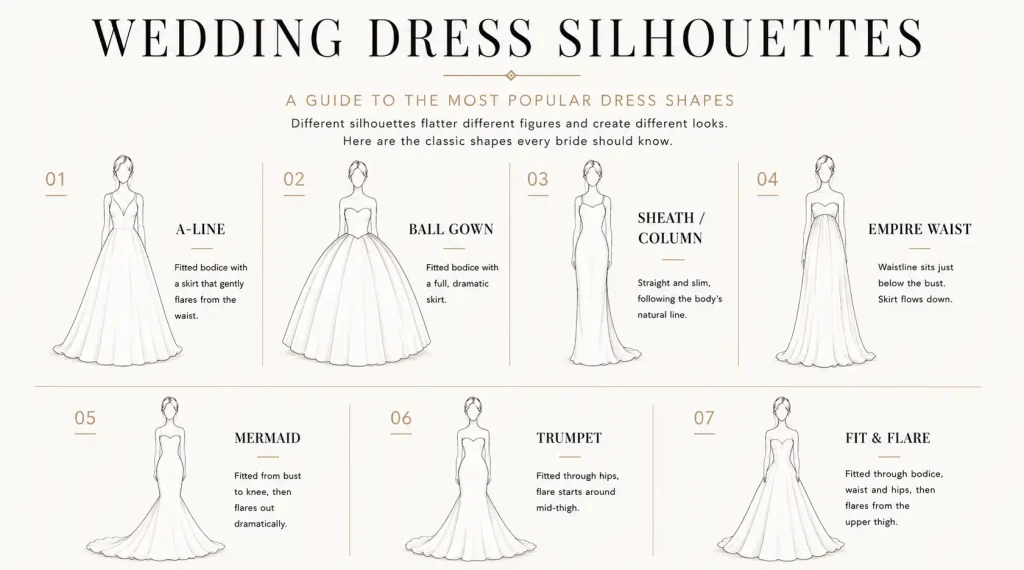
Before you can match a silhouette to your shape, you need to know what each one actually is. Here is a quick breakdown of the most common wedding dress silhouette types:
- A-line: Fitted at the bodice and gently flares from the waist down. It looks like the letter A, and it works on almost every shape.
- Ball gown: A full, dramatic skirt attached to a fitted bodice. The classic princess look. Heavy volume below the waist.
- Mermaid: Hugs the body closely from bust to knee, then flares out. Best suited for defined curves.
- Trumpet: Similar to a mermaid, but the flare starts slightly higher, around mid-thigh. A softer, more wearable version.
- Sheath / Column: Straight and slim, following the body’s natural line with no flare. Clean and sleek.
- Empire waist: The waistline sits just below the bust. The skirt flows straight down from there.
- Fit and Flare: Fitted through the bodice and hips, flares out at or just below the knee. More dramatic than a trumpet.
Here’s a quick guide to finding your best match:

Quick Tip:
Try on at least one silhouette you think you won’t like. Brides consistently report that the dress they fell hardest for was one they almost did not pull off the rack.
One bride on Reddit, Tiny-firefly, shared advice that really says it all:
“Try on the major silhouettes (A-line, mermaid, ballgown, sheath). There are also different style elements to consider (like necklines, draping, beading, corset style lines etc). If you want in as a blank slate, let the stylist know and they can pull gowns for you. Take note of what you like and don’t like and communicate with them so they know what direction to go in.”
What Wedding Dress Suits an Hourglass Figure?
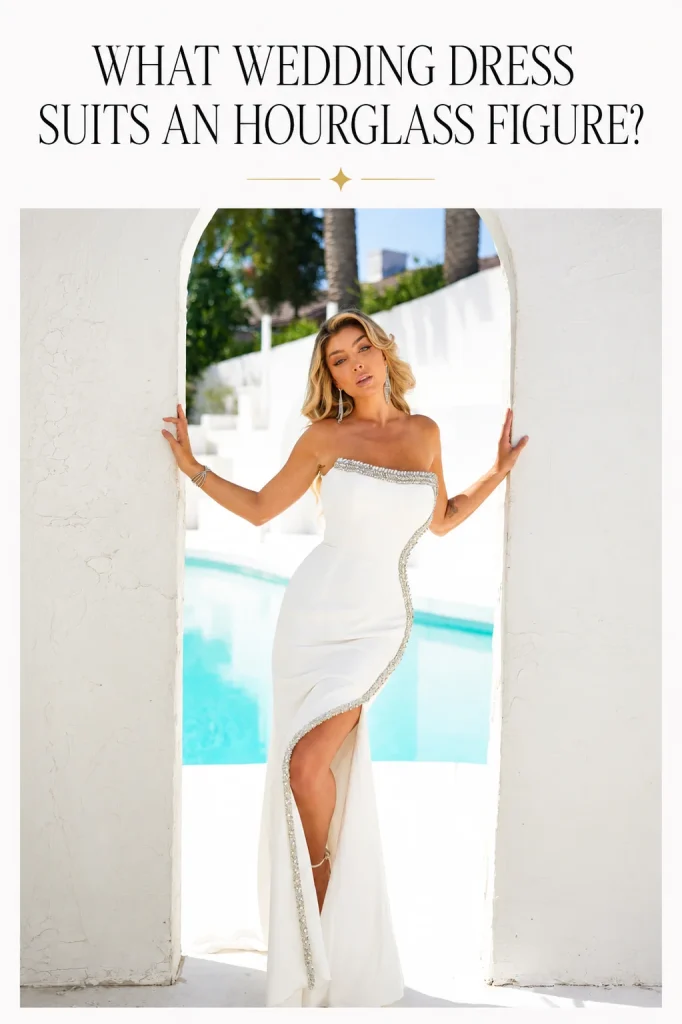
Your goal: Celebrate those curves; do not hide them.
Your bust and hips are roughly equal in width, and your waist is noticeably narrower. The best wedding dress silhouettes for an hourglass figure are the ones that follow that shape rather than fight it.
- Best silhouettes: Mermaid, trumpet, and fit-and-flare. A-line also works beautifully and gives a bit more ease through the hips.
- Necklines to try: V-neck, sweetheart, off-the-shoulder. All of these frame the bust and draw the eye to your defined waist.
- Fabrics that shine: Satin, silk, and crepe drape and move with your frame. Avoid stiff taffeta or structured fabrics that add bulk instead of flow.
- What to skip: An extremely full ball gown can overwhelm your natural waist definition. If the ball gown is calling to you, look for one with a fitted bodice that does not hide the waist.
- Styling tip: A low or open back adds drama and elongates the torso without covering what makes your figure so striking.
What Wedding Dress Suits a Pear-Shaped Body?

Your goal: Draw the eye upward and gracefully skim the hips.
Your hips are wider than your bust and shoulders. The right bridal gown creates visual balance by adding interest to your upper body while letting the skirt flow naturally past the hips.
- Best silhouettes: A-line, ball gown, empire waist. The A-line in particular is a pear shape’s best friend. It defines the waist and flares out evenly, so the hips are balanced rather than highlighted.
- Necklines to try: Off-the-shoulder, strapless, sweetheart. Any neckline that adds visual width to the upper body helps balance your proportions.
- Details that help: Embellishments on the bodice, such as beading, lace, or ruching, pull the eye upward. A plain bodice with a busy skirt does the opposite.
- What to skip: Mermaid and trumpet silhouettes tend to emphasize the hip-to-waist contrast. They can work, but fit is critical. Try before you decide.
- Fabric tip: A structured bodice paired with a flowy skirt in chiffon or tulle creates a beautiful balance between defined shape up top and ease below.
What Wedding Dress Suits an Apple or Oval Shape?
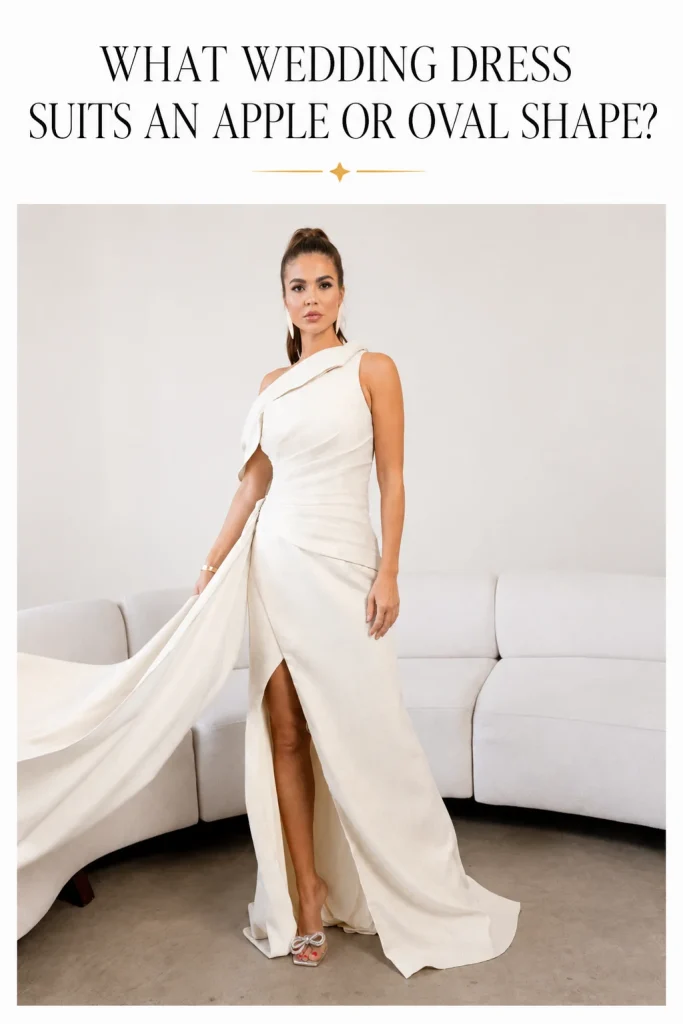
Your goal: Elongate the torso and draw the eye up and down, away from the midsection.
Your waist is the widest point of your frame, with similar measurements at the bust and hips. The right wedding dress creates a long vertical line and lets the fabric move naturally.
- Best silhouettes: Empire waist, soft A-line, and flowing sheath styles with draping across the midsection. The empire waist is especially effective because it cinches just below the bust and flows freely from there.
- Necklines to try: V-neckline is your strongest option. It creates a vertical visual line that elongates the upper body. Scoop necks also work well.
- Fabric tip: Avoid anything stiff or structured at the waist. Choose draped fabrics like chiffon, georgette, or soft mesh. They move with you and do not cling to areas you want to skim.
- What to skip: High necklines or halter styles that cut across the shoulder and add visual bulk to the bust area.
- Styling tip: Ruching or gathering across the midsection adds a flattering dimension. It creates texture and movement where a plain panel would draw unwanted attention.
What Wedding Dress Suits an Inverted Triangle Shape?
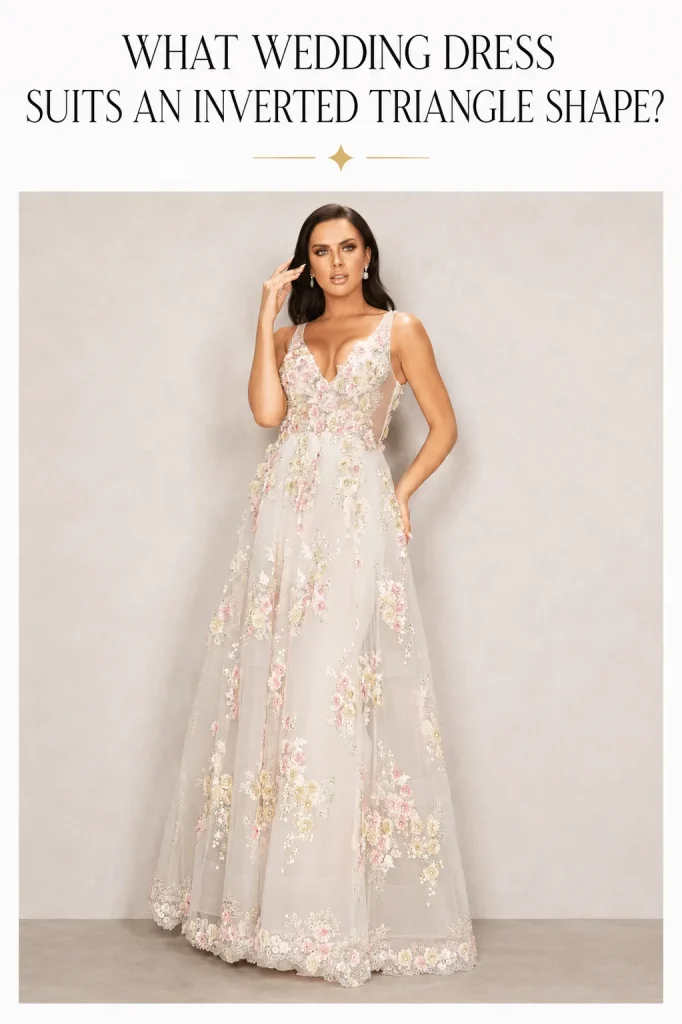
Your goal: Balance broad shoulders by adding fullness at the hips.
Your shoulders and bust are wider than your hips. The right bridal dress adds volume below the waist and softens the shoulder line rather than emphasizing it.
- Best silhouettes: Ball gown and A-line are your strongest choices. Anything with a full skirt shifts the visual weight downward and creates a more balanced silhouette overall.
- Necklines to try: V-neck, scoop, and sweetheart all draw the eye inward and soften the shoulder line. These shapes narrow the upper body visually.
- What to skip: Strapless or off-the-shoulder necklines visually widen the shoulders. Structured sleeves or cap sleeves that cut across the shoulder can also add bulk.
- Sleeve tip: If you want sleeves, flutter sleeves, or soft illusion sleeves in mesh or tulle, soften the shoulder without adding width.
- Fabric tip: Soft fabrics like chiffon and organza add movement and volume to the skirt without stiffening the shoulder area.
What Wedding Dress Suits a Petite Bride?
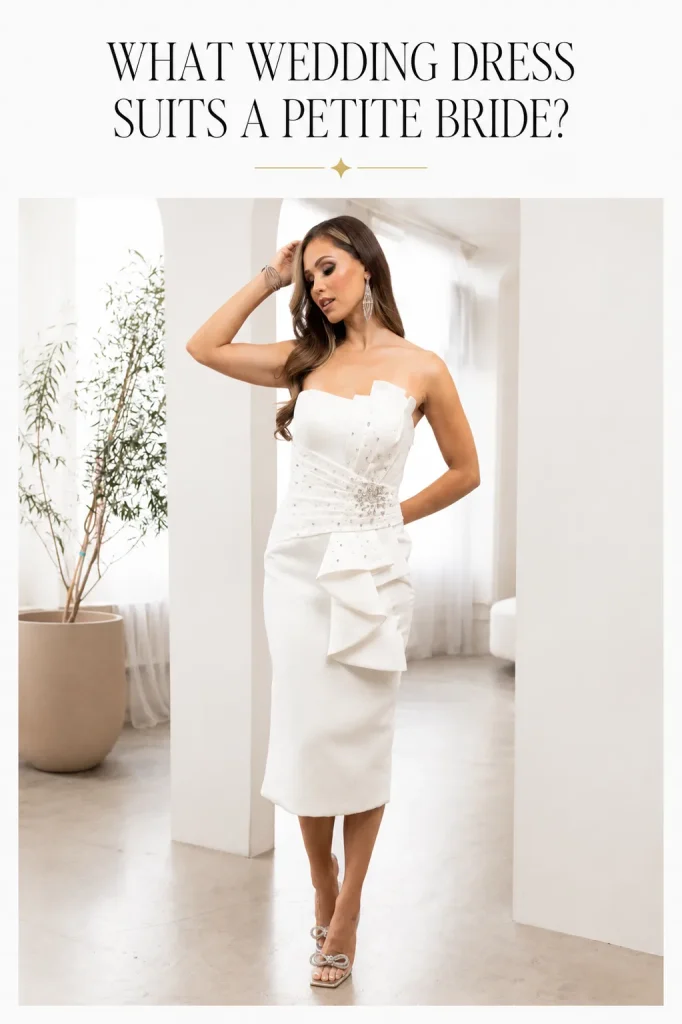
Your goal: Elongate your frame. The dress should work for you, not overwhelm you.
Petite brides are typically under 5’4″. The challenge is choosing a wedding gown that makes you look tall and long, not one that wears you instead of the other way around.
- Best silhouettes: Sheath or column styles create one clean vertical line from shoulder to floor. A-line with a high waist also works well because the waistline falls right below the bust, making legs appear longer.
- Necklines to try: V-neckline and sweetheart both lengthen the torso visually. They create a downward-pointing shape that draws the eye toward your center and adds height.
- What to skip: Drop waist styles cut the body at the wrong point and visually shorten the legs. Overly full ball gown skirts and heavy cathedral trains can overwhelm a petite frame entirely.
- Heel tip: Nude or strappy heels in a skin-matching tone extend the leg line without breaking it up visually.
- Fabric tip: Choose lighter fabrics like chiffon, soft tulle, or crepe. Heavy mikado or structured taffeta can add visual weight that works against a petite frame.
What Are the Wedding Dress Trends for 2026?
Knowing which wedding dress silhouette works for your shape is the foundation. But once you have that filter in place, trends give you direction on which styles to explore first. Here is what is leading the 2026 bridal collections right now.
- Oversized bow details: Big, sculptural bows at the back or at the hip are everywhere. They work specifically well on column and A-line silhouettes. Playful and modern at the same time.
- Sheer and illusion fabrics: Mesh bodices, tulle overlays, and illusion panels are a major 2026 bridal moment. Great for brides who want some coverage while keeping things light and current.
- Structured corset bodices: The corset trend has fully crossed into bridal. It is especially flattering for hourglass and pear shapes because it cinches the waist while providing serious support.
- 3D floral embellishments: Fabric flowers and petal appliques applied directly to the gown. You will see them on mermaid and sheath silhouettes most often. Statement-making without being loud.
- Minimalist crepe gowns: Clean, unadorned crepe in soft white or ivory. The anti-maximalist pick for 2026 brides who want something sleek, modern, and timeless all at once.
Wrapping It Up
Finding the right wedding dress starts with one simple step: knowing your shape. Once you know that, the right wedding dress silhouette becomes obvious, and the whole process gets a lot less overwhelming. You stop scrolling endlessly and start shopping with a real direction. At I Dress Cute, our bridal collection is curated across every silhouette and style so you can find your dress without the noise. Whether you are a petite bride, an hourglass figure, or somewhere in between, your dress is here. Shop the full bridal collection at I Dress Cute.
Frequently Asked Questions
Q1. How do you know what wedding dress will look best on you?
Start by identifying your body shape with a tape measure. Then match the silhouette that celebrates your proportions or creates the balance you want. Trying on multiple bridal dress styles always reveals more than photos alone ever can. Trust the mirror over the hanger.
Q2. What is the most flattering wedding dress style?
A-line is widely considered the most universally flattering silhouette. It defines the waist, skims the hips, and works across nearly every body type and height. If you are unsure where to start, pull an A-line first.
Q3. What type of wedding dress makes you look slimmer?
V-necklines and empire waists create a long vertical line that elongates the body. A-line skirts skim the hips without adding volume. Avoid heavy, stiff fabrics that add visual bulk where you do not want it.
Q4. What neckline is most flattering for a wedding dress?
The V-neck elongates the torso and flatters most shapes. Sweetheart necklines enhance the bust and add romantic shape. Off-the-shoulder styles draw the eye upward and soften broad shoulders. The best one depends on your specific body shape.
Q5. What is the average cost of a wedding dress in 2026?
In the US, the average wedding dress costs between $1,800 and $2,500. Designer gowns run significantly higher. Shopping from a curated online boutique like iDressCute gives you access to designer styles at more accessible price points, often with worldwide shipping.
Q6. What are the most common mistakes brides make when shopping for a wedding dress?
Bringing too many opinions is the top one. Shopping too late, under six months before the wedding, is another. Only trying on one silhouette is the third. Stay open to unexpected styles and you will almost always find something better than what you originally imagined.
Q7. What is the best fabric for a wedding dress?
It depends on your season and preferred style. Satin and crepe work for structured, elegant looks. Chiffon and organza suit lighter, flowy silhouettes and warm weather weddings. Lace adds romance and works beautifully across nearly every silhouette.
Q8. What color should your wedding dress be?
Most US brides choose ivory, soft white, or champagne. A simple way to check your undertone: look at the veins on your inner wrist. Greenish veins suggest warm undertones, which suit ivory and champagne. Bluish veins suggest cool undertones, which look stunning in bright white or blush.
Q9. What is the trend in wedding dresses for 2026?
The biggest 2026 bridal trends are structured corset bodices, oversized bow details, sheer illusion fabrics, 3D floral appliqués, and clean minimalist crepe gowns. Across all of these, the emphasis is on individuality: dress for your body, your style, and your moment.